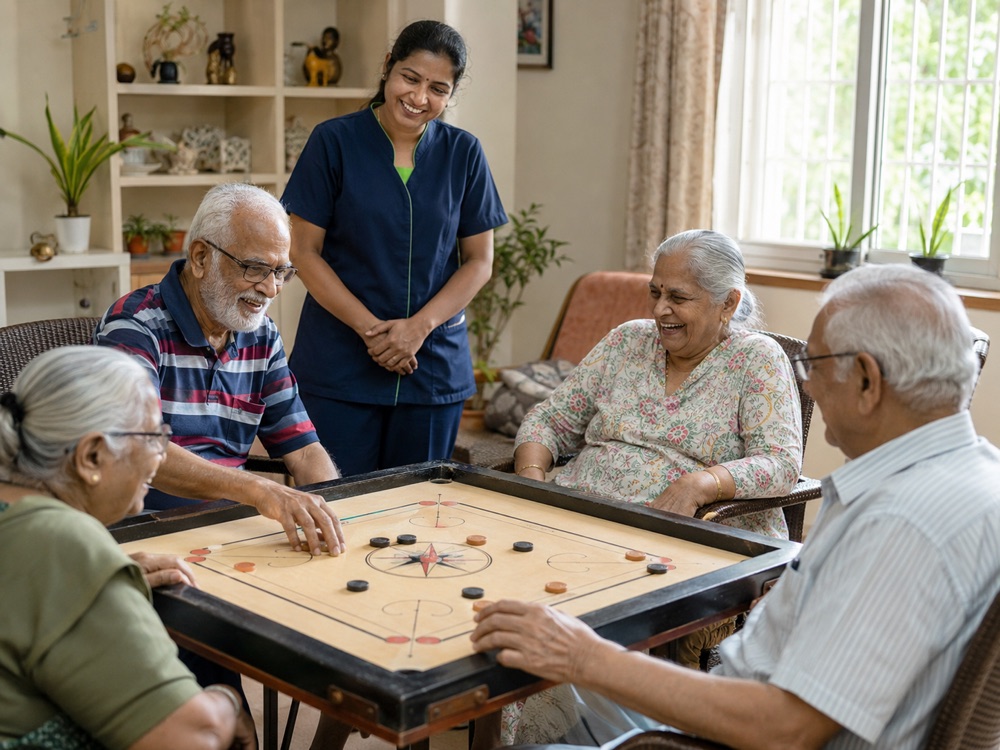
Pre-Prosthetic Preparation
Stump care education, desensitisation and strength work that make fitting dramatically smoother.
 AVR Physiocare Physiotherapy & Rehab
 Whether it was diabetes, an accident or disease that took the limb, the question every amputee eventually asks is the same one: will I walk into a room again without everyone noticing? We have watched enough of our patients do exactly that to answer with confidence. Yes, with preparation, a well-fitted prosthesis and patient, methodical gait training.
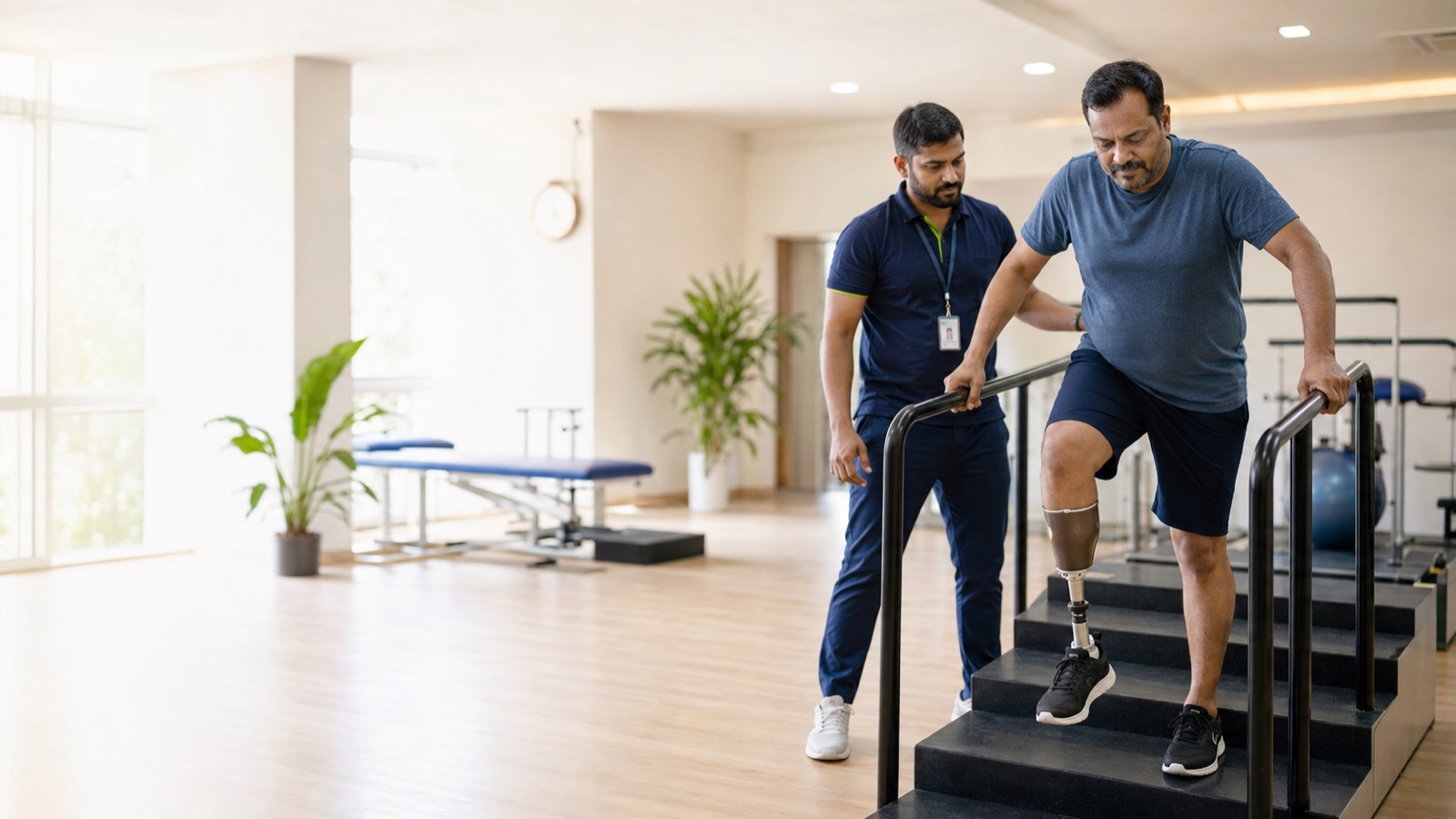
Our program covers the whole arc. Before the prosthesis: conditioning the residual limb, desensitisation, and building the core and hip strength a prosthetic walk secretly runs on. During fitting: working directly with your prosthetist, because comfort in the socket decides everything. And then the real work, teaching you and your new limb to trust each other, on clinic floors first and the real world soon after.
01 · Who this helps
Stump care education, desensitisation and strength work that make fitting dramatically smoother.
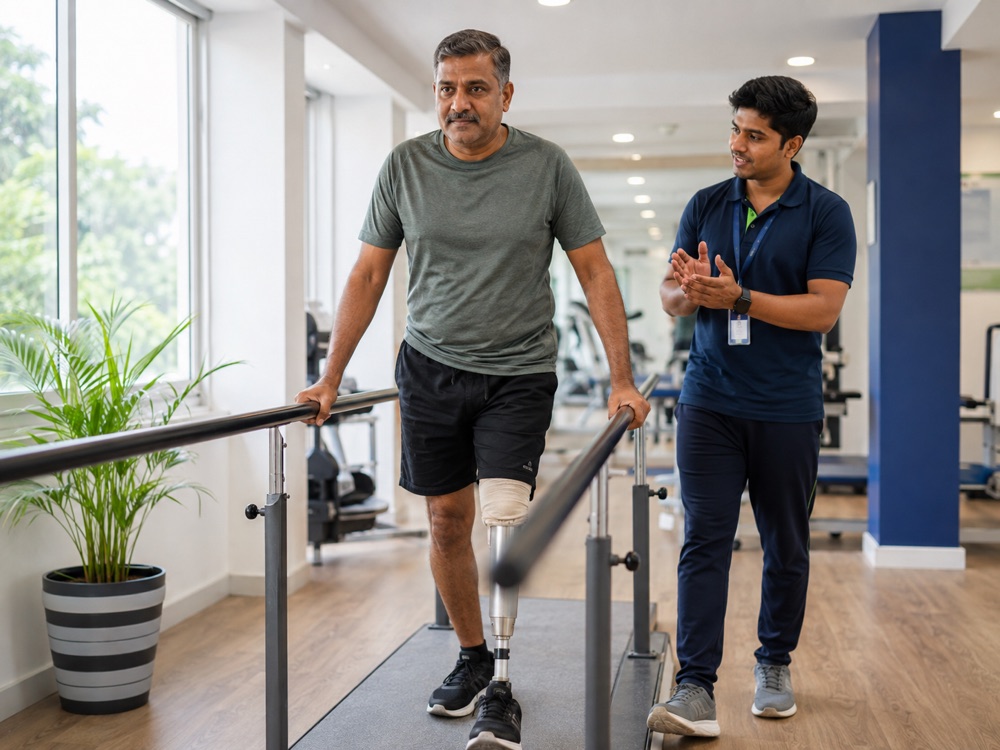
Weight transfer and standing balance between parallel bars, unhurried, until standing feels ordinary again.
Step-length symmetry and rhythm drills that smooth the limp away, metre by metre.
Stairs, slopes, wet floors, buses, crowds, falling safely and getting up. Life, not corridors.
02 · Our method
“One year after my accident I walked my daughter into her school on her first day. Nobody in that corridor knew about my leg. That was the goal, and we reached it.”
Below-knee amputee, gait training graduate
Core, hips and the remaining limb carry a prosthetic gait. We strengthen them from day one, before the first step is ever taken.
Fit and alignment problems masquerade as walking problems. We communicate with your prosthetist so both get solved.
Mirrors, metronomes and cueing that even out step length until the gait reads as simply walking.
Graded practice on ramps, stairs and outdoor ground until no ordinary surface feels like a threat.
03 · The journey
Conditioning, balance and stump care, ideally starting soon after surgical healing allows.
Supported standing and stepping as you and the new limb learn each other, with your prosthetist in the loop.
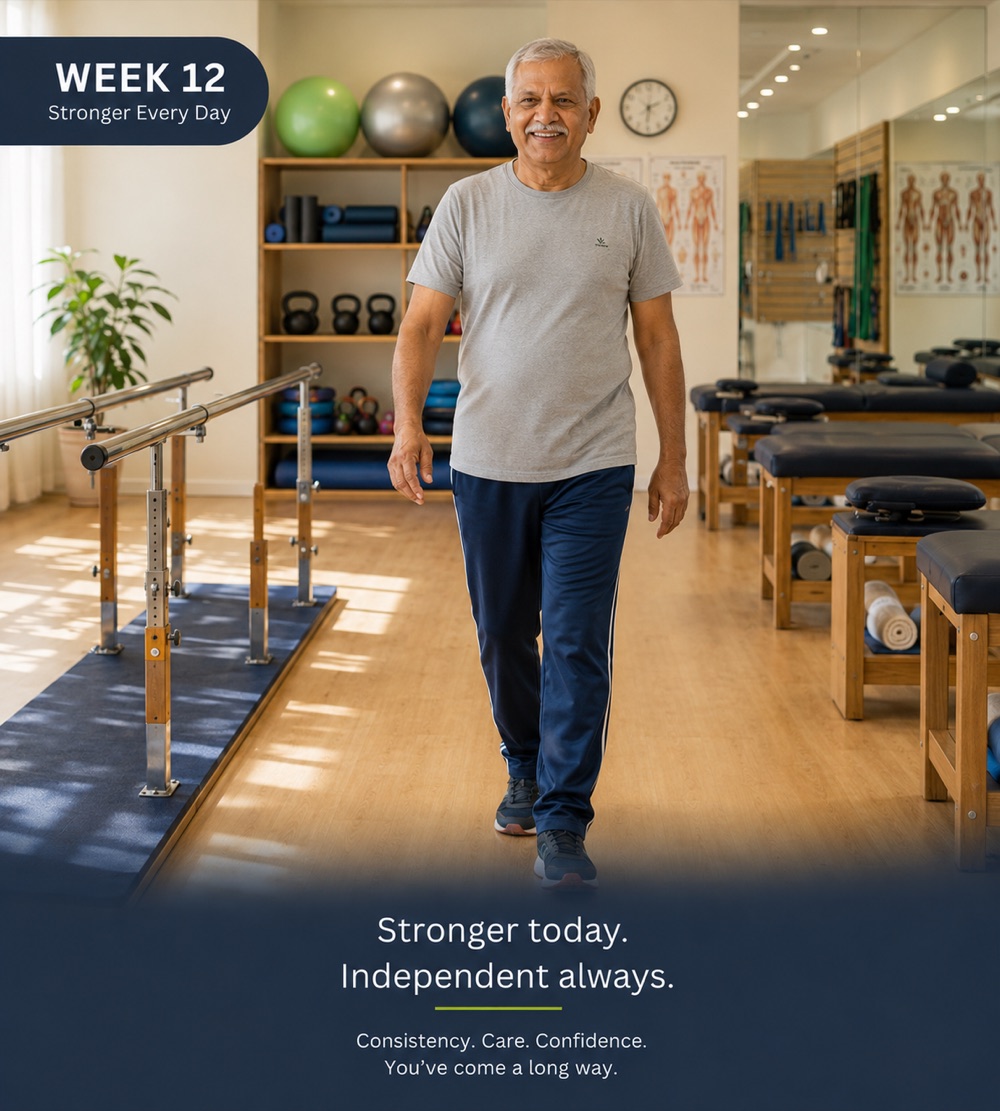
Progressive gait training through home, workplace and community-level challenges, to independence.
04 · Good to know
Anything else on your mind? Call us. A physiotherapist answers the phone, not a machine.
Call +91 96867 82358Gentle rehabilitation ideally begins within weeks of surgery, once healing permits. Early positioning and conditioning prevent contractures and significantly shorten the road to walking.
Most below-knee amputees walk confidently within two to four months of consistent training. Above-knee takes longer. Age, fitness and the reason for amputation all matter, and we will give you a personal, honest estimate.
It changes how carefully we protect your other foot, monitor skin and dose the work, and we take all of it seriously. Many of our amputee patients are diabetic and do very well.
Usually, yes. Years of compensation patterns can be retrained. We analyse your gait, fix the underlying strength and alignment issues, and rebuild a smoother walk.
Bannerghatta Road · RR Nagar · Kengeri
Call and describe what you are going through. We will give you an honest answer, even if that answer is that you need something else.