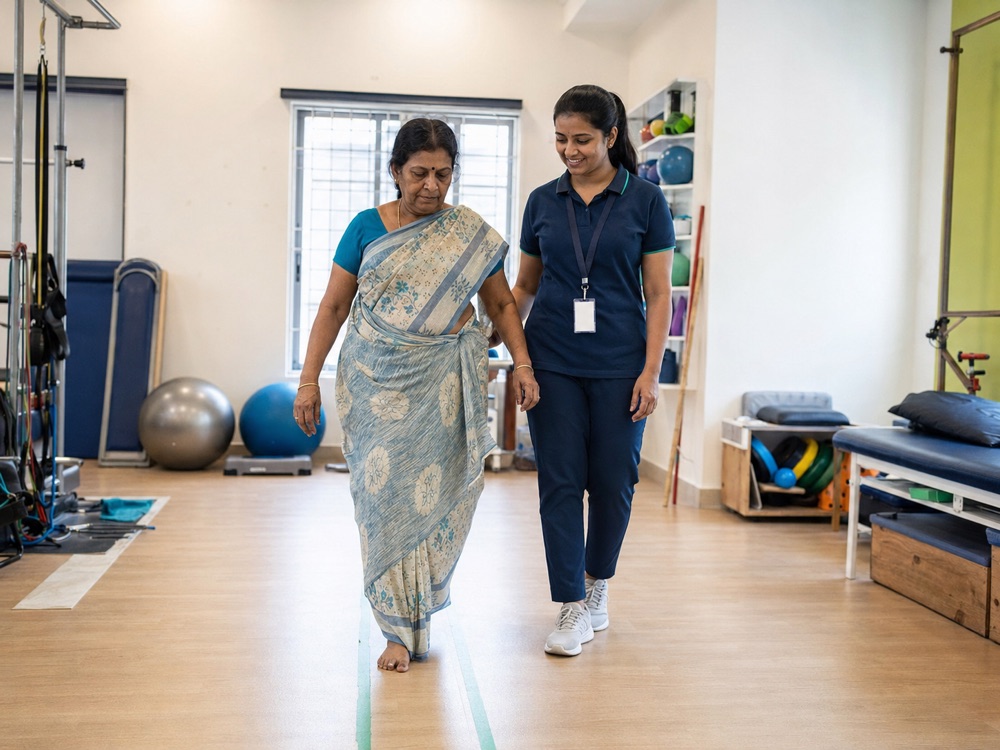
Gait & Freezing Management
Cue-based gait training that restores stride length, plus practical unfreezing techniques for doorways and turns.
 AVR Physiocare Physiotherapy & Rehab
 The steps get shorter. The voice gets softer. The morning walk to the temple quietly stops. Parkinson’s shrinks movement so gradually that families often only notice when the shuffling starts. What many are never told: alongside medication, structured exercise is one of the very few things consistently shown to slow that functional decline.
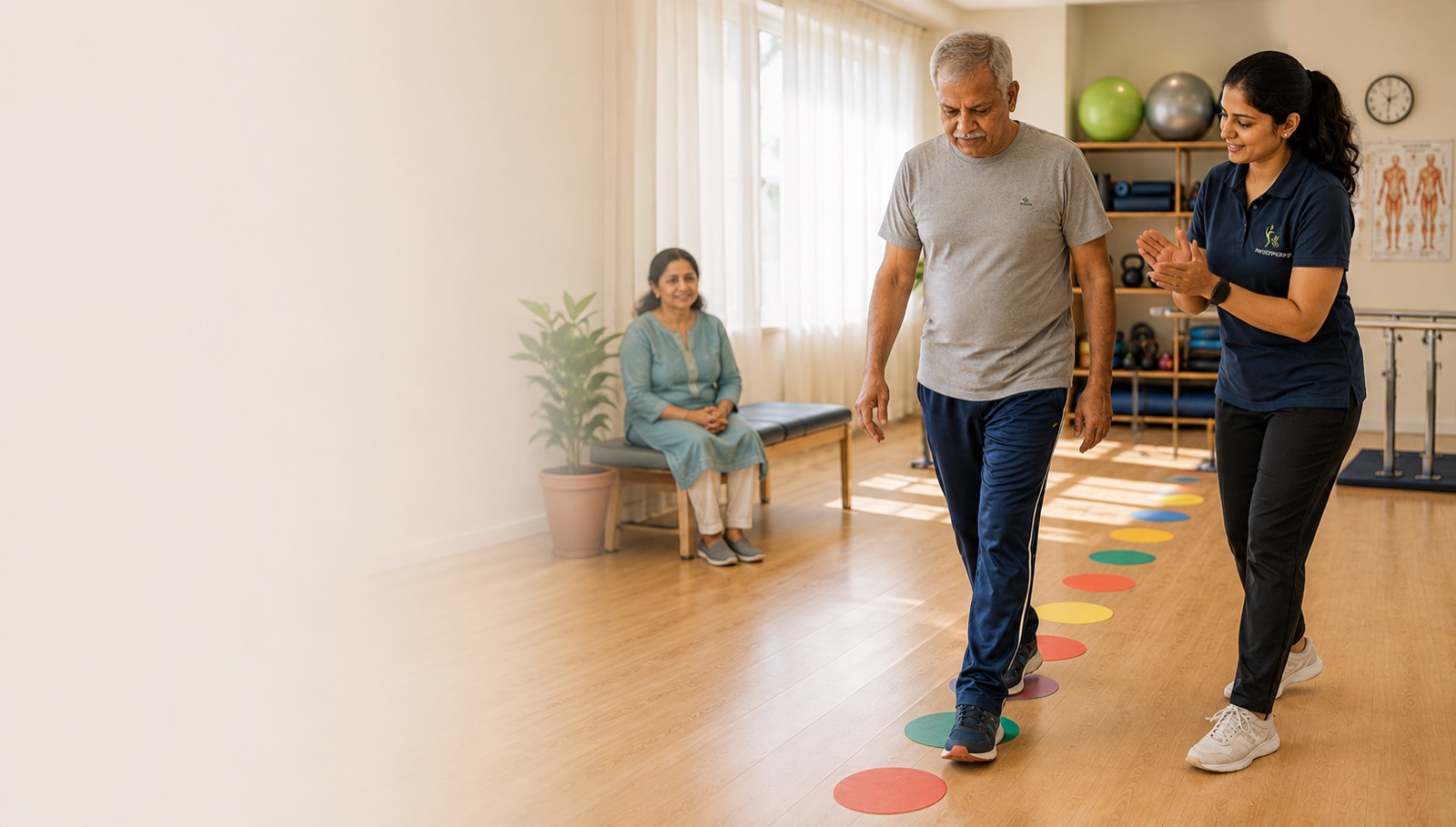
Our Parkinson’s sessions are built on amplitude and rhythm. Big, deliberate, exaggerated movements practised intensively, and external cues like beats and floor markers that bypass the exact brain circuits the condition affects. We also schedule your sessions inside your medication on-window, so you train when your body responds best. Families tell us the first thing that returns is not the stride. It is the confidence.
01 · Who this helps
Cue-based gait training that restores stride length, plus practical unfreezing techniques for doorways and turns.
Progressive balance challenges in a guarded setting, because a fall is the costliest event in Parkinson’s.
Extension and amplitude work that reopens the chest, lifts the gaze and makes breathing easier.
Getting out of bed, turning in the kitchen, walking to the gate. Trained as skills, not left to chance.
02 · Our method
“Appa had stopped going to the temple because of his shuffling. Four months of balance training later, he goes every single morning.”
Daughter of a Parkinson’s patient
Exaggerated, larger-than-life movements practised at intensity, the principle behind the most researched Parkinson’s therapy protocols in the world.
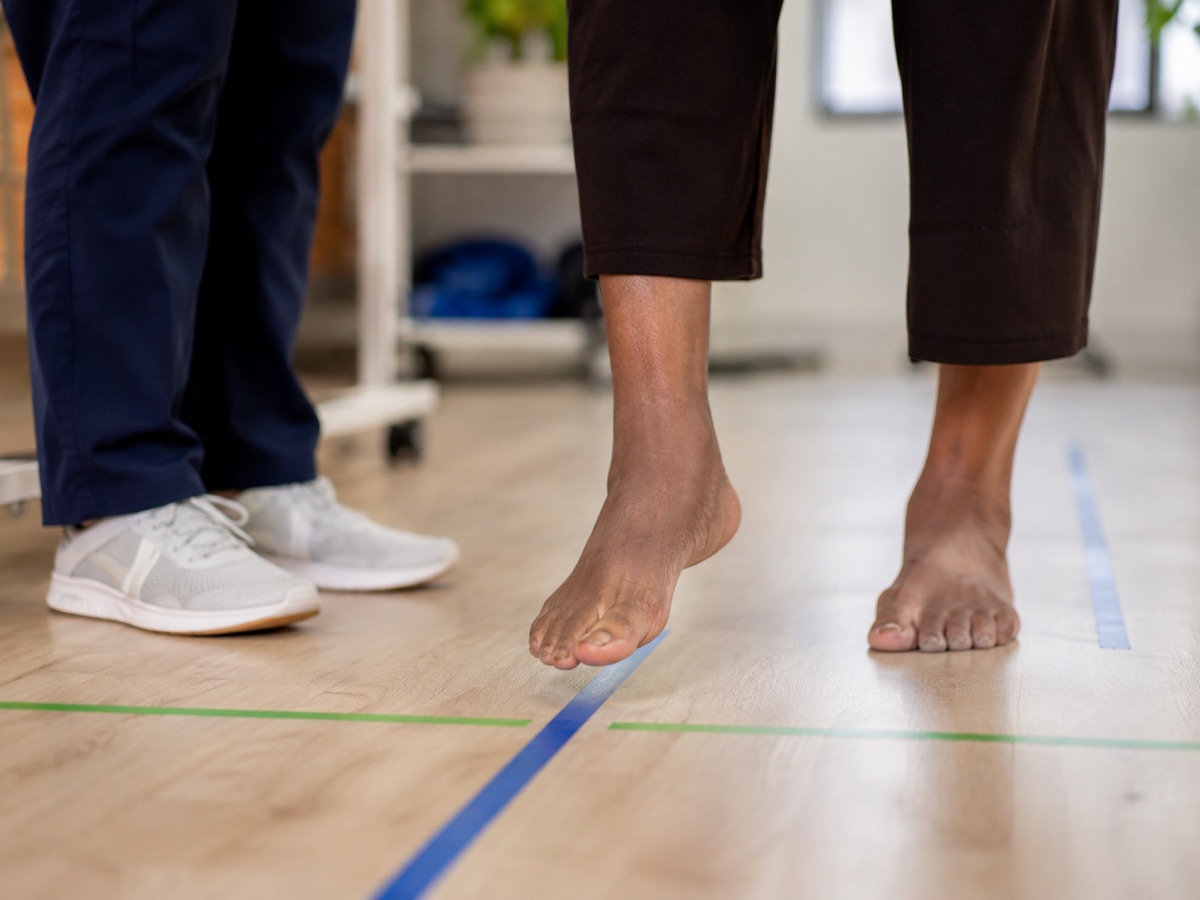
Metronome beats, floor lines, counted rhythms. Simple signals that reroute movement around the affected circuitry.
Hips, trunk and ankles, the three regions that quietly decide whether balance holds. Strengthened deliberately.
Doorway techniques, bed mobility, turning safely. On paper, practised with your family until automatic.
03 · The journey
Gait, balance, posture and freezing patterns assessed during your medication on-window, with baseline walking measures recorded.
Intensive cue-based training with visible markers of progress: stride length, walking speed, turning confidence.
A weekly maintenance routine, re-tested monthly and adjusted as your condition and prescriptions evolve.
04 · Good to know
Anything else on your mind? Call us. A physiotherapist answers the phone, not a machine.
Call +91 96867 82358
It cannot change the underlying condition, but strong evidence shows structured exercise slows functional decline, protects balance and keeps independence longer. The earlier it starts, the more it preserves.
Freezing responds well to cueing: visual lines, rhythm counting, weight-shift techniques. We train these until they become automatic and teach your family how to help without pulling.
During the on-window, when medication is working and quality movement is possible. We schedule around your prescription timing deliberately.
No. The goals change with the stage. Early on we push amplitude and fitness. Later we protect transfers, prevent falls and keep caregivers safe. Every stage has something worth training.
Bannerghatta Road · RR Nagar · Kengeri
Call and describe what you are going through. We will give you an honest answer, even if that answer is that you need something else.