
Knee & Hip Replacement
From day-one mobility to confident stairs and, when your implant allows, back down to the floor for pooja.
 AVR Physiocare Physiotherapy & Rehab
 Ask any orthopedic surgeon what separates their best knee replacement results from their worst, and most will give you the same answer: what the patient did in the six weeks after. A technically perfect surgery can still end in a stiff, disappointing knee if rehabilitation is skipped, delayed or done half-heartedly. The operation opens the door. Rehab is the walking through it.
We run protocol-led recovery for the surgeries Bengaluru has most: knee and hip replacements, ACL and ligament reconstructions, spine procedures, rotator cuff repairs and fracture fixations. Your surgeon’s protocol is our law, every phase has measurable exit criteria, and progress is tracked in degrees of bend and metres walked rather than vague encouragement. If your operation is still ahead, our prehabilitation sessions get your body strong before the knife, which measurably speeds everything after.
01 · Who this helps
From day-one mobility to confident stairs and, when your implant allows, back down to the floor for pooja.
Criteria-based sport rehab where each stage is earned: swelling control, range, strength, then return-to-play testing.
Careful early mobility, core rebuilding and back-safe movement retraining after discectomy or fusion.
Staged range and strength after rotator cuff repair, and reawakening joints after weeks in a cast.
02 · Our method
“My surgeon said the replacement was perfect but the physio would decide the result. He was right. Ninety days later I sat cross-legged for pooja again.”
Knee replacement patient, age 58
Timelines and precautions followed exactly, with progress reported back whenever your surgeon wants it.
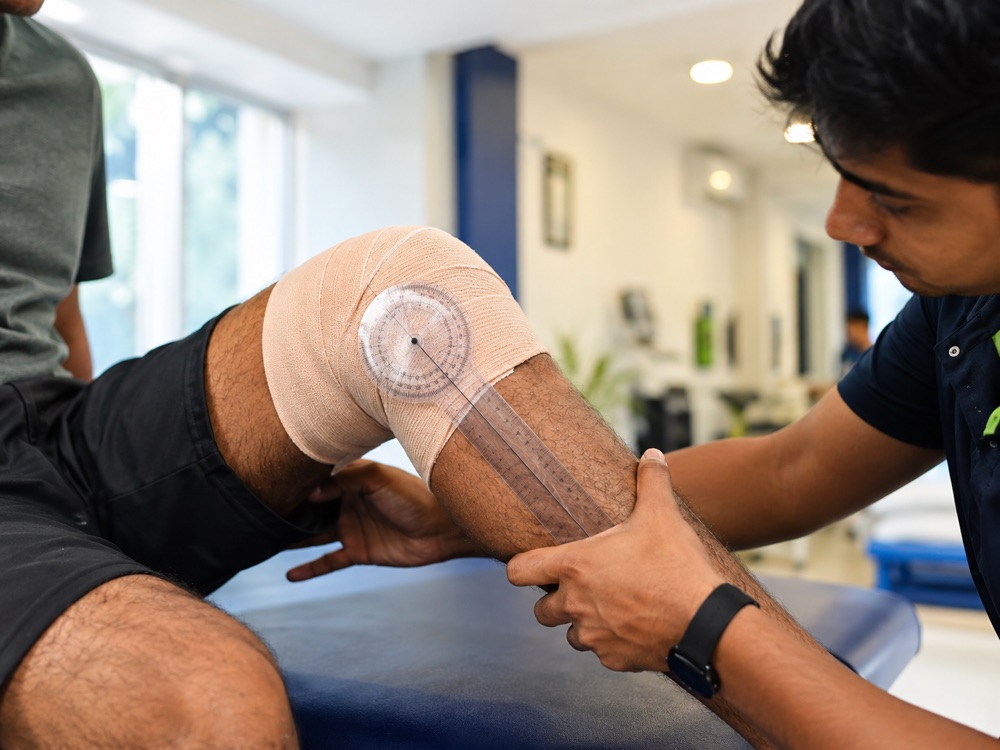
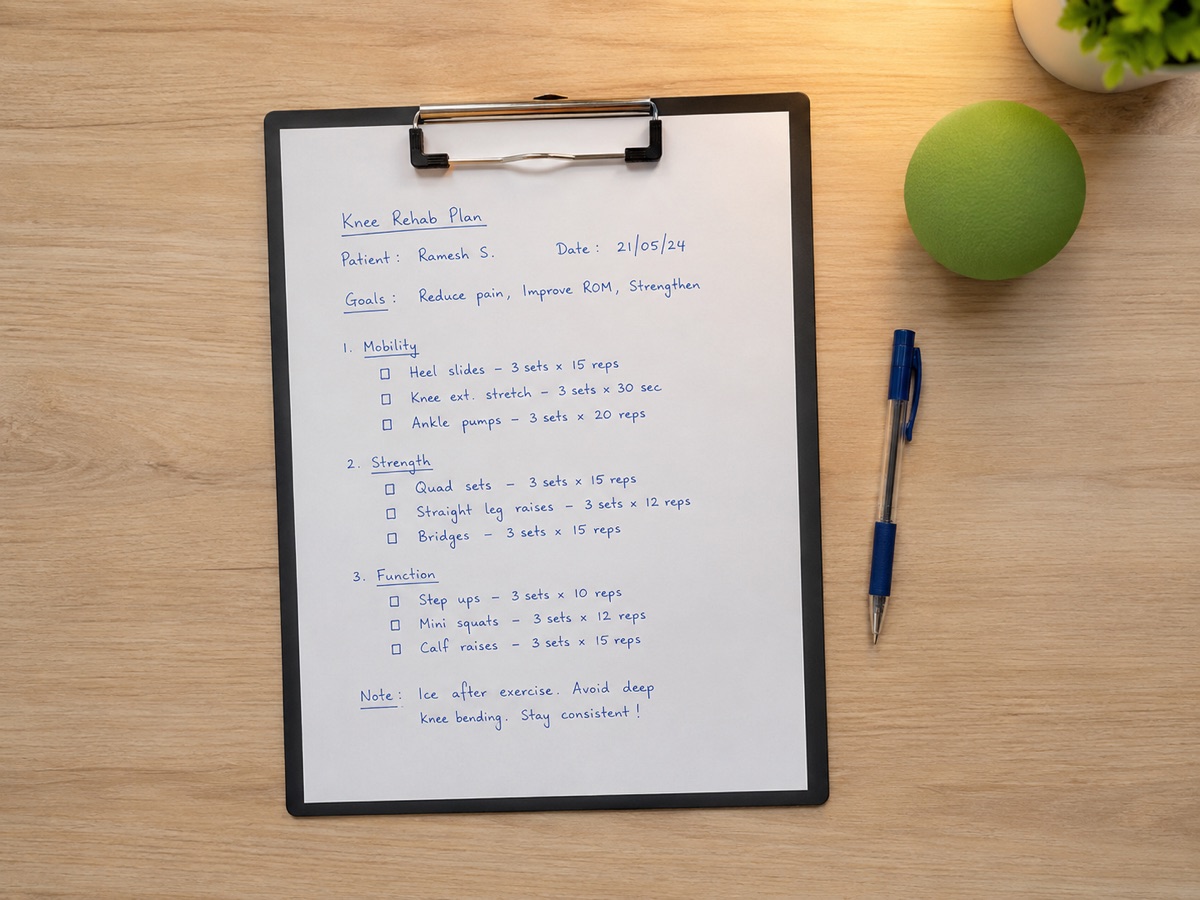
Degrees on a goniometer, strength percentages, walk distances. Every phase has numbers to hit, and you see them.
Post-surgical rehab should challenge, not traumatise. We push at the right moments and guard the rest.
Two to four weeks of targeted strengthening before planned surgery pays back multiples in recovery speed after it.
03 · The journey
Strength, mobility and honest preparation for what the first weeks after surgery will actually feel like.
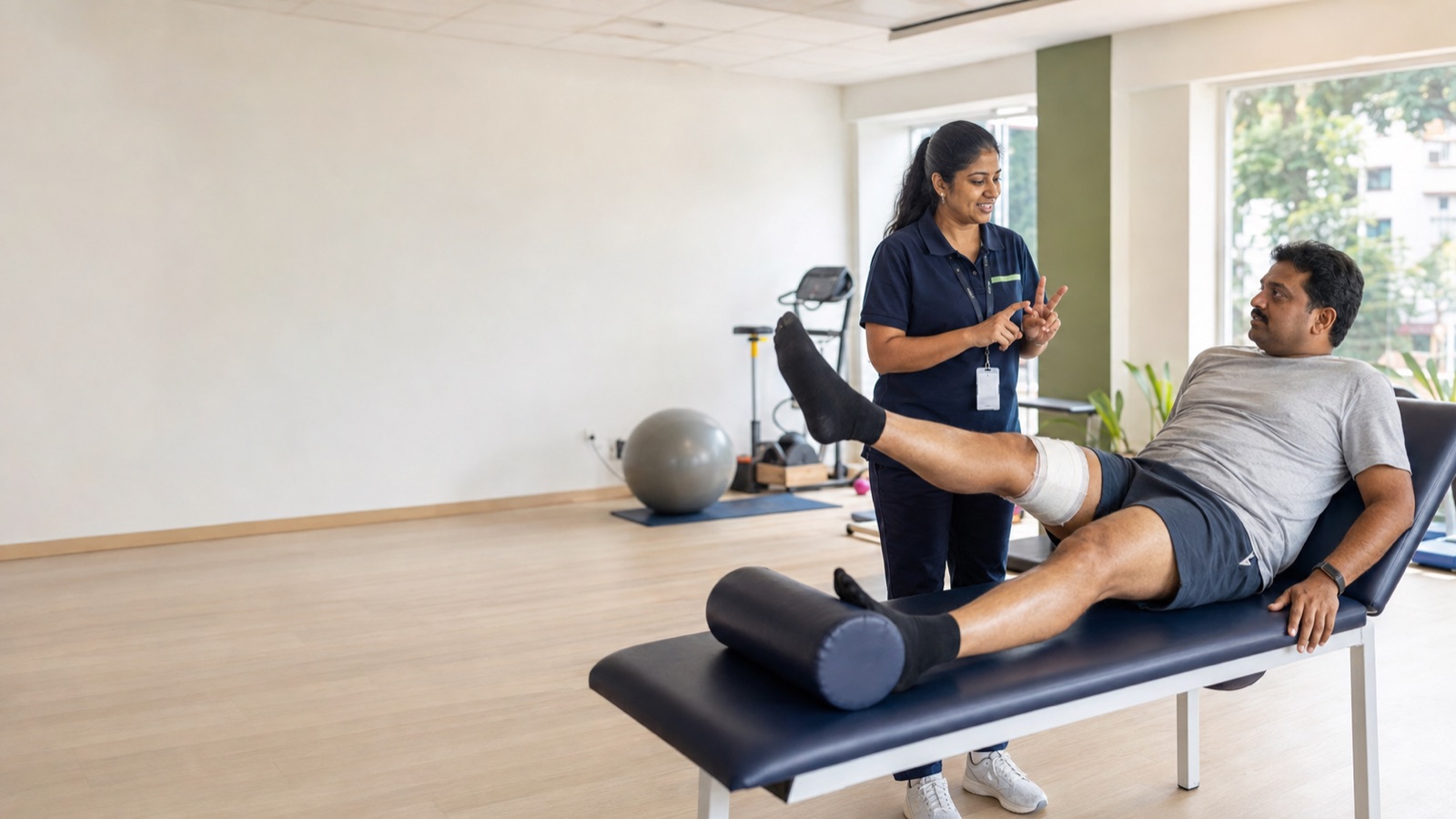
Swelling control, early range and safe walking, strictly inside surgical precautions.
Progressive strengthening to full function: stairs, floor-sitting, sport, whatever your life requires of the joint.
04 · Good to know
Anything else on your mind? Call us. A physiotherapist answers the phone, not a machine.
Call +91 96867 82358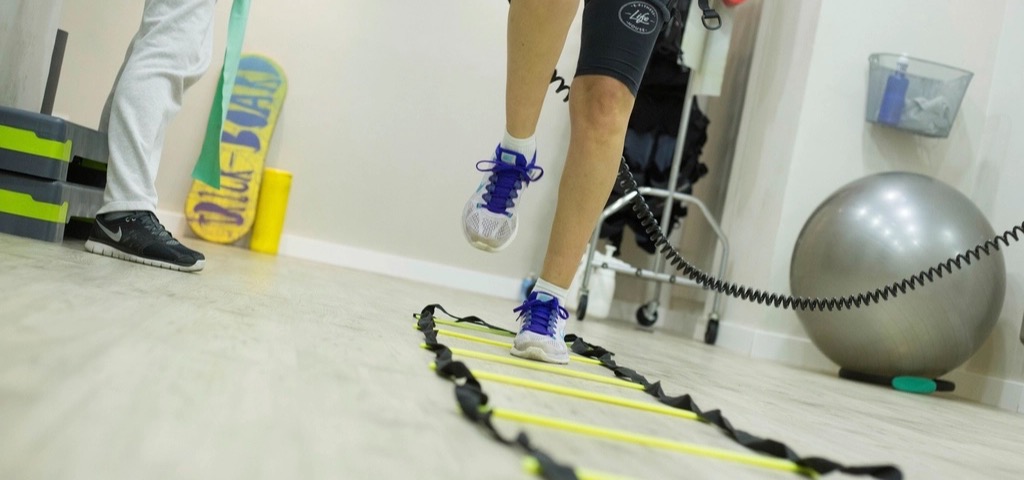
Usually within a day or two of surgery in hospital, with structured outpatient rehab beginning in the first week. The first six weeks matter enormously, and delay is the most common cause of a stiff knee.
Always. Bring your discharge summary and protocol sheet. We build your program inside those boundaries and check with your surgeon whenever anything needs clarifying.
The evidence says yes: patients who enter surgery stronger recover faster and with less pain. Even two focused weeks before a planned operation makes a measurable difference.
Stairs are usually comfortable between weeks four and eight after knee replacement. Floor-sitting depends on your implant and surgeon’s advice, and when it is cleared, we train it properly and safely.
Bannerghatta Road · RR Nagar · Kengeri
Call and describe what you are going through. We will give you an honest answer, even if that answer is that you need something else.