
Balance & Vestibular Retraining
Vestibular and balance retraining for the dizziness and swaying that follow many head injuries.
 AVR Physiocare Physiotherapy & Rehab
 After a head injury, discharge day comes with relief and a strange emptiness. The scans look stable, the stitches are out, and yet the person who came home is exhausted by a conversation, unsteady on the stairs, frustrated by tasks that used to be automatic. Families tell us nobody quite prepared them for this part. This part is rehabilitation, and it is where months of steady gains are made.
Brain injury recovery punishes hurry. So our TBI program is built on careful increments: short structured sessions that respect neuro-fatigue, physical training paired with coordination and attention work, and small wins stacked deliberately, because in this recovery small wins compound. Your family stays in the room, informed and involved, from the first session.
01 · Who this helps
Vestibular and balance retraining for the dizziness and swaying that follow many head injuries.
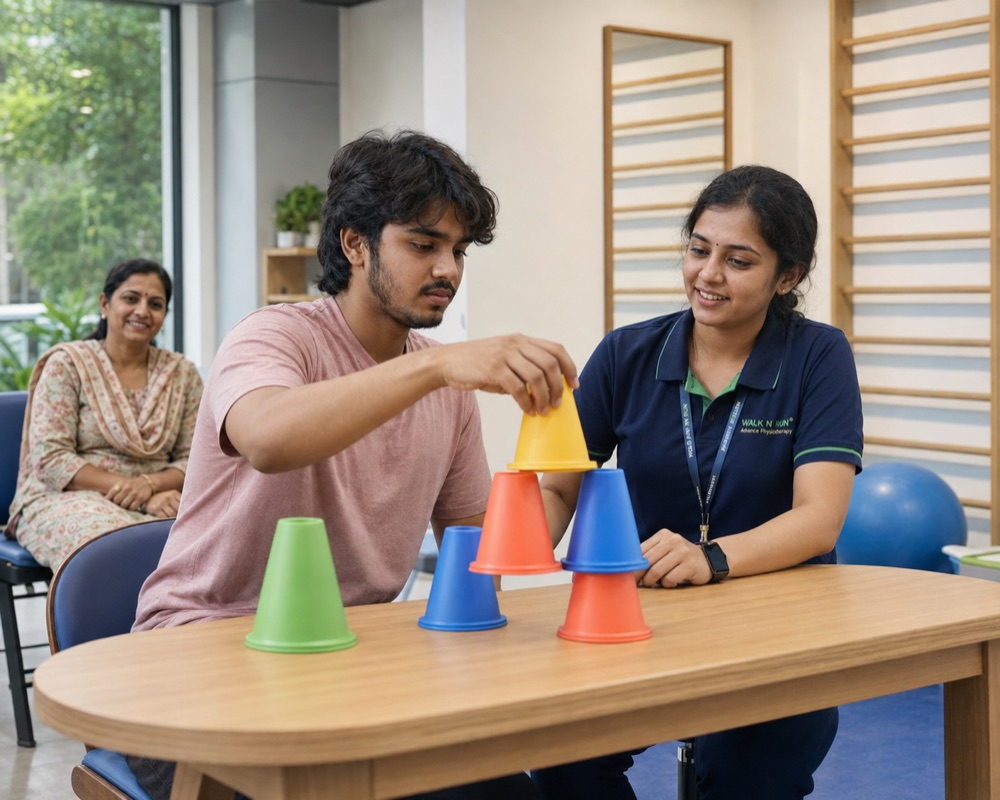
Hand-eye and limb coordination drills, from pegboards to catch-and-release, graded to your recovery.
Conditioning that grows capacity while respecting the fatigue wall, instead of slamming into it.
Walking while talking. Moving while deciding. Dual-task training, because real life never asks for one thing at a time.
02 · Our method
“After the accident we were told to just wait and watch. AVR gave us something better: a plan, and proof every month that he was improving.”
Mother of a TBI patient
Overexertion sets brain injury recovery backwards. We progress in small measured steps and track fatigue as seriously as strength.
Predictable session formats and routines, which an injured brain engages with far more easily than novelty.
Cognitive challenges woven into physical training as recovery allows, coordinated with speech and occupational therapists where needed.
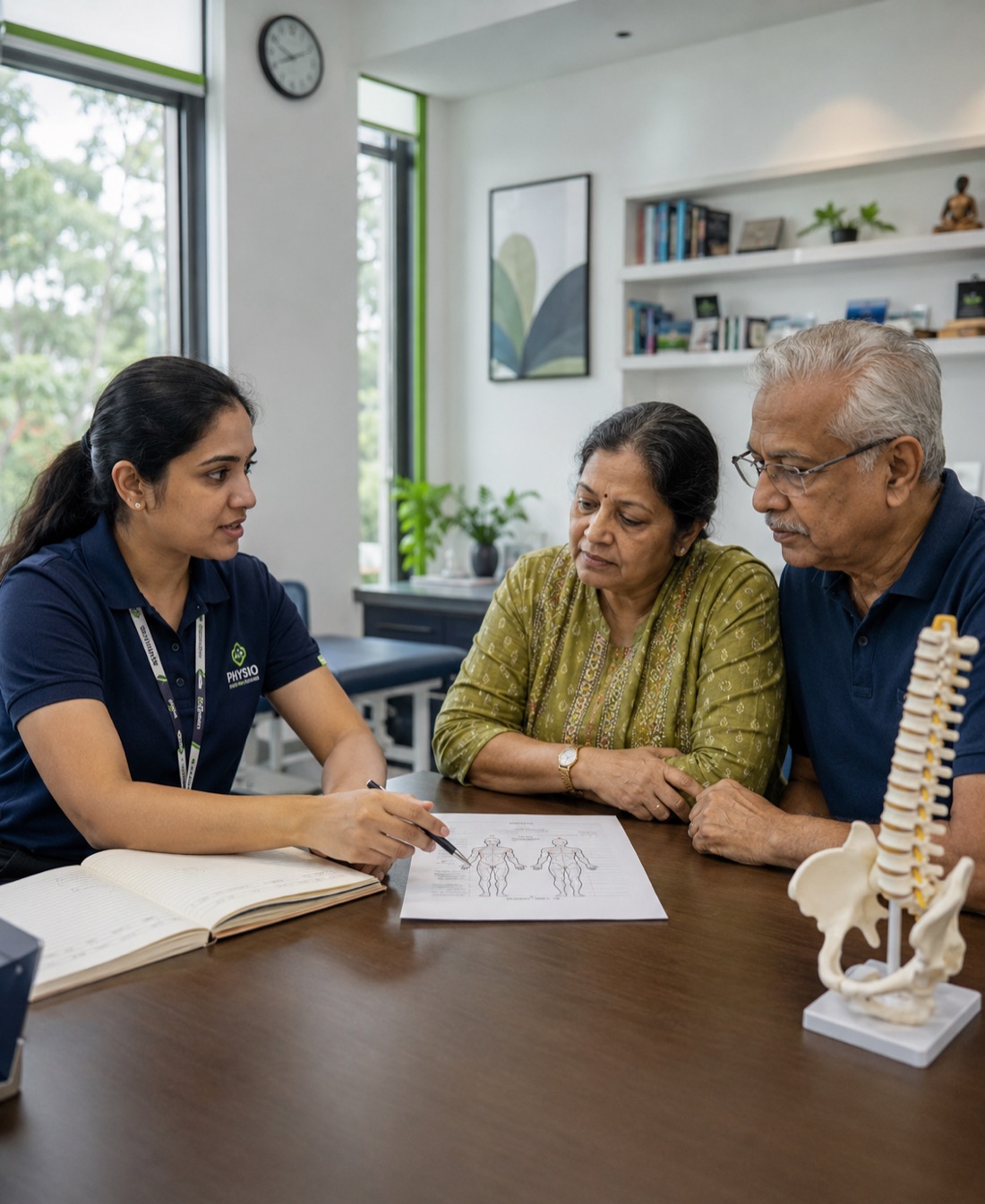
Regular sit-downs so expectations, home routines and safety measures stay aligned as things change.
03 · The journey
Balance, coordination, stamina and goals assessed calmly, paced to avoid overload, with your doctors’ guidance folded in.
Consistent sessions with weekly micro-goals and visible tracking, because seeing progress is fuel in this recovery.
Work, studies, riding, driving readiness. Approached step by step, with honest conversations at each gate.
04 · Good to know
Anything else on your mind? Call us. A physiotherapist answers the phone, not a machine.
Call +91 96867 82358Once your neurologist or neurosurgeon clears activity, earlier is better. We coordinate with your treating team and match intensity to their guidance.
Yes. Neuro-fatigue is expected, not a barrier. We begin with short structured sessions and build tolerance gradually. Working within the fatigue limit is part of the method.
We weave cognitive-motor training into physical sessions, and coordinate with speech and occupational therapists where deeper cognitive rehabilitation is needed.
Honestly: months to years, with the fastest gains usually in the first year. What we promise is measured progress reviews, so you always know the direction of travel.

Bannerghatta Road · RR Nagar · Kengeri
Call and describe what you are going through. We will give you an honest answer, even if that answer is that you need something else.