Mobility & Walking Recovery
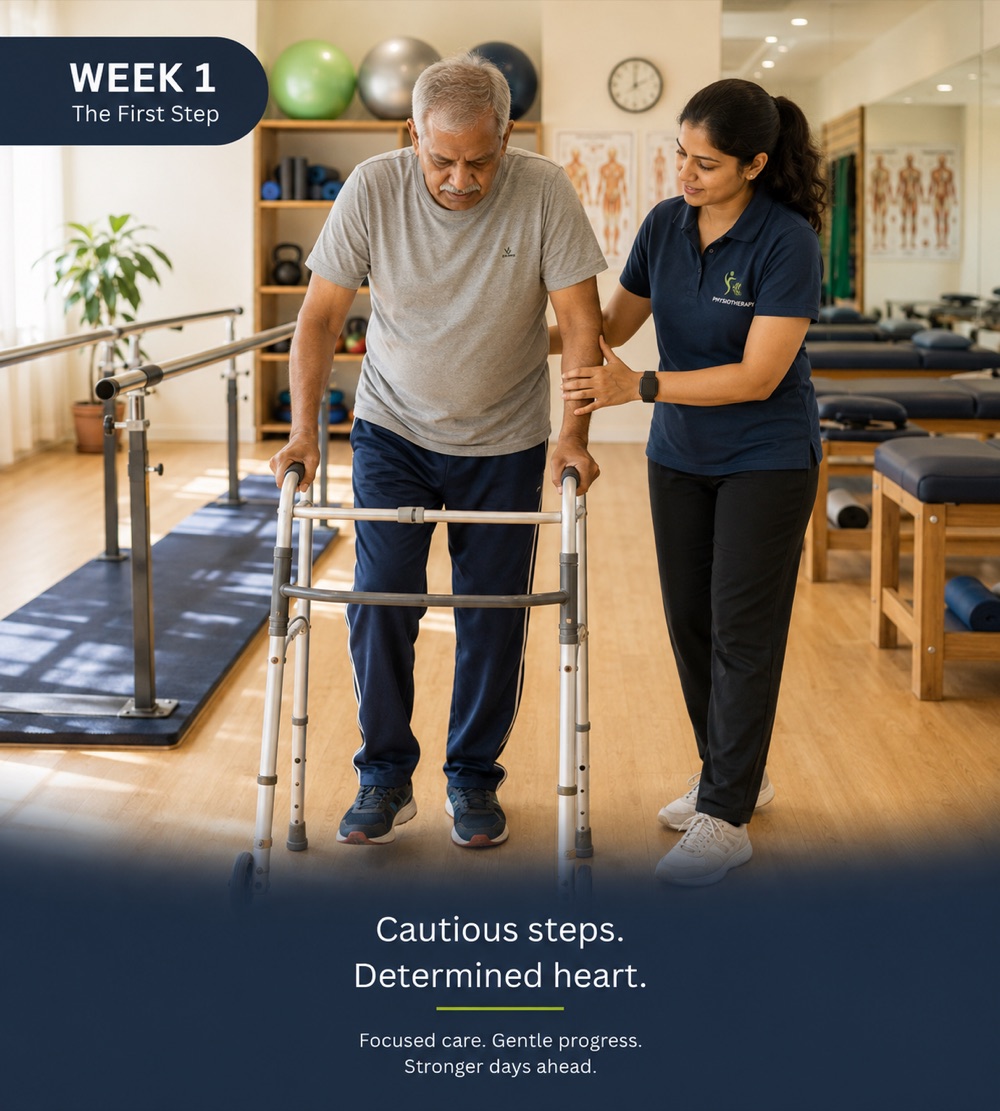
The progression everything else depends on, drilled safely with support that reduces as you strengthen.
 AVR Physiocare Physiotherapy & Rehab
 The discharge summary is in a file. The hospital bed is returned. And the family is left with the question nobody quite answered: what now? Here is what stroke research says with unusual clarity: the brain relearns fastest with early, intensive, repetitive practice of real movements. Not passive machines. Not rest. Practice.
That practice is what we run at AVR Physiocare, whether you come to us two weeks after a stroke or two years. We map exactly what your body can do today, agree on three goals that matter to your actual life, and then build daily, achievable steps toward them. Families from hospitals across south Bengaluru bring their people to us for precisely this stage of the journey.
01 · Who this helps
The progression everything else depends on, drilled safely with support that reduces as you strengthen.
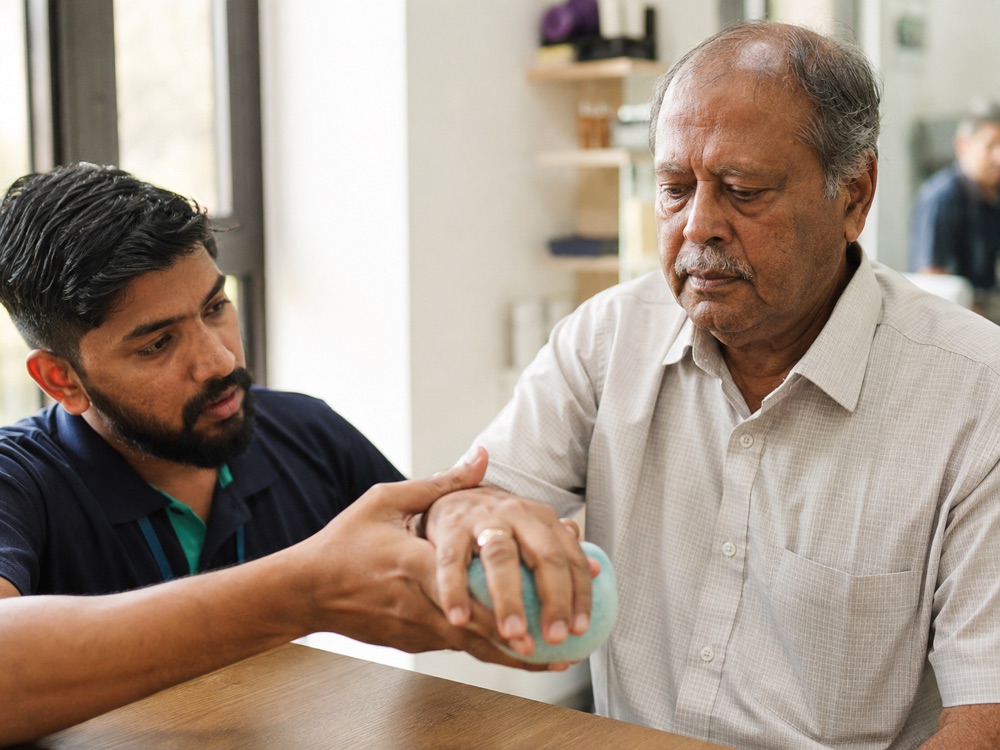
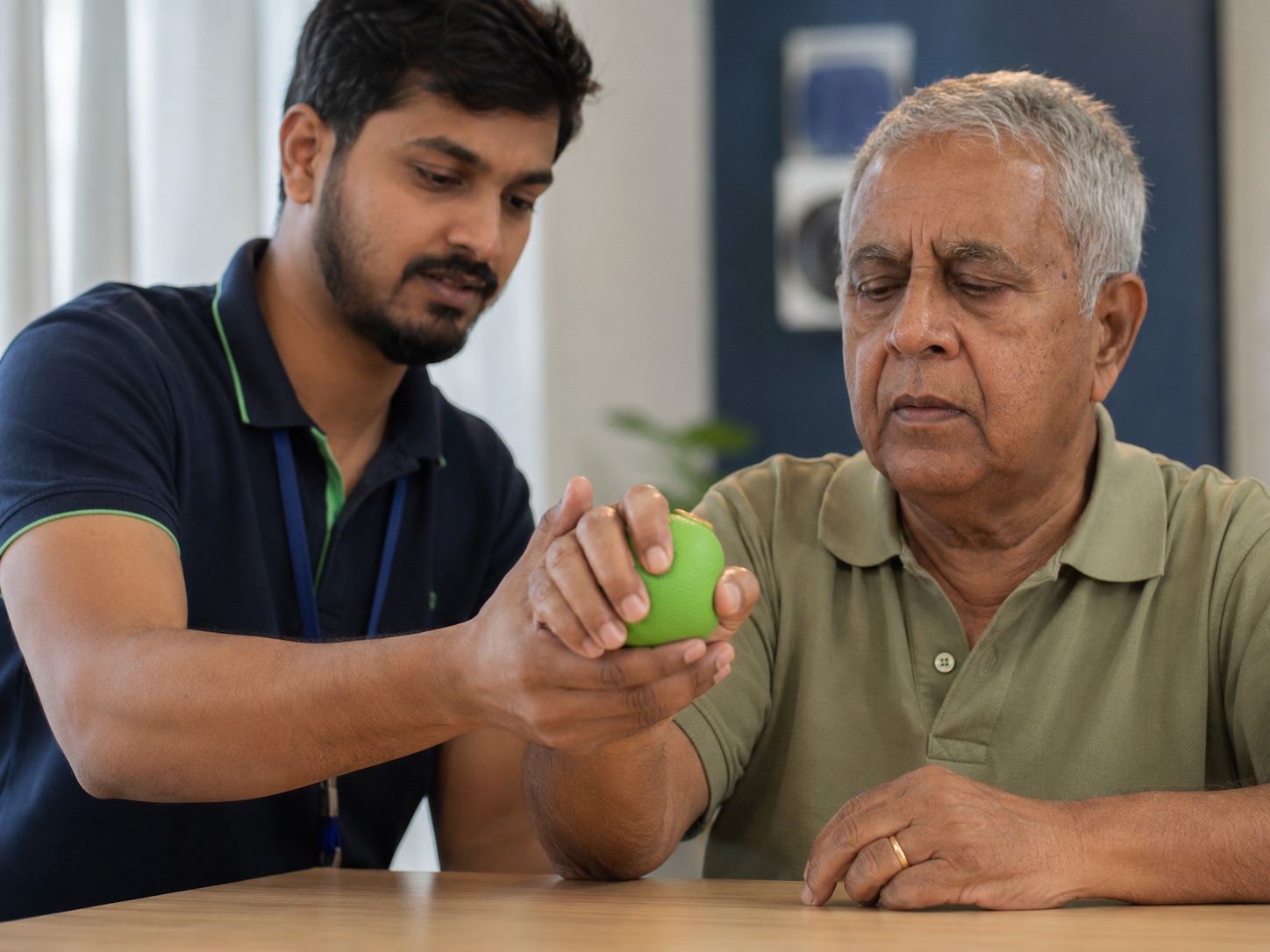
Task-based repetition with cups, spoons and door handles. Slower than the leg, and absolutely worth the work.
Fear of falling shrinks recovery more than weakness does. We rebuild trust in the body deliberately.
Bathing, dressing, eating unassisted. The wins that make home feel like home again.
02 · Our method
“Six months after his stroke my husband walked into our daughter’s wedding hall on his own two feet. I will never forget that walk.”
Wife of a stroke rehabilitation patient
Bedridden, wheelchair-based or already walking with a limp. Every starting point has a correct next step, and the assessment finds yours.
Neuroplasticity rewards repetition. Our sessions pack in more quality movement practice than any passive treatment can.
The affected side works hard. The stronger side learns to help without taking over, which is a skill of its own.
Transfers, positioning, home exercise. Your people learn all of it, because stroke recovery is a household project.
03 · The journey
Tone, strength, balance, sensation and daily function, then three concrete first-month goals agreed with you and your family.
Frequent sessions on your highest-priority movements, measured against your recorded baseline.
Therapy shifts to home routines, outdoor walking and the specific things you have been waiting to do again.
04 · Good to know
Anything else on your mind? Call us. A physiotherapist answers the phone, not a machine.
Call +91 96867 82358As early as the treating doctors allow, often within days. Early intensity is strongly linked to better recovery. And if months have already passed, do not write it off: meaningful gains are still possible with the right program.
Yes. We regularly start with bedridden patients, working on positioning, sitting tolerance and safe transfers first, at the center or through home visits.
In the first stage, usually four to six, because repetition drives the rewiring. After your assessment we will give you an honest recommendation, not a package pitch.
Hand recovery is typically slower, and modern task-based methods have genuinely improved what is possible. We will assess it honestly and show you exactly what the plan would be.
Bannerghatta Road · RR Nagar · Kengeri
Call and describe what you are going through. We will give you an honest answer, even if that answer is that you need something else.